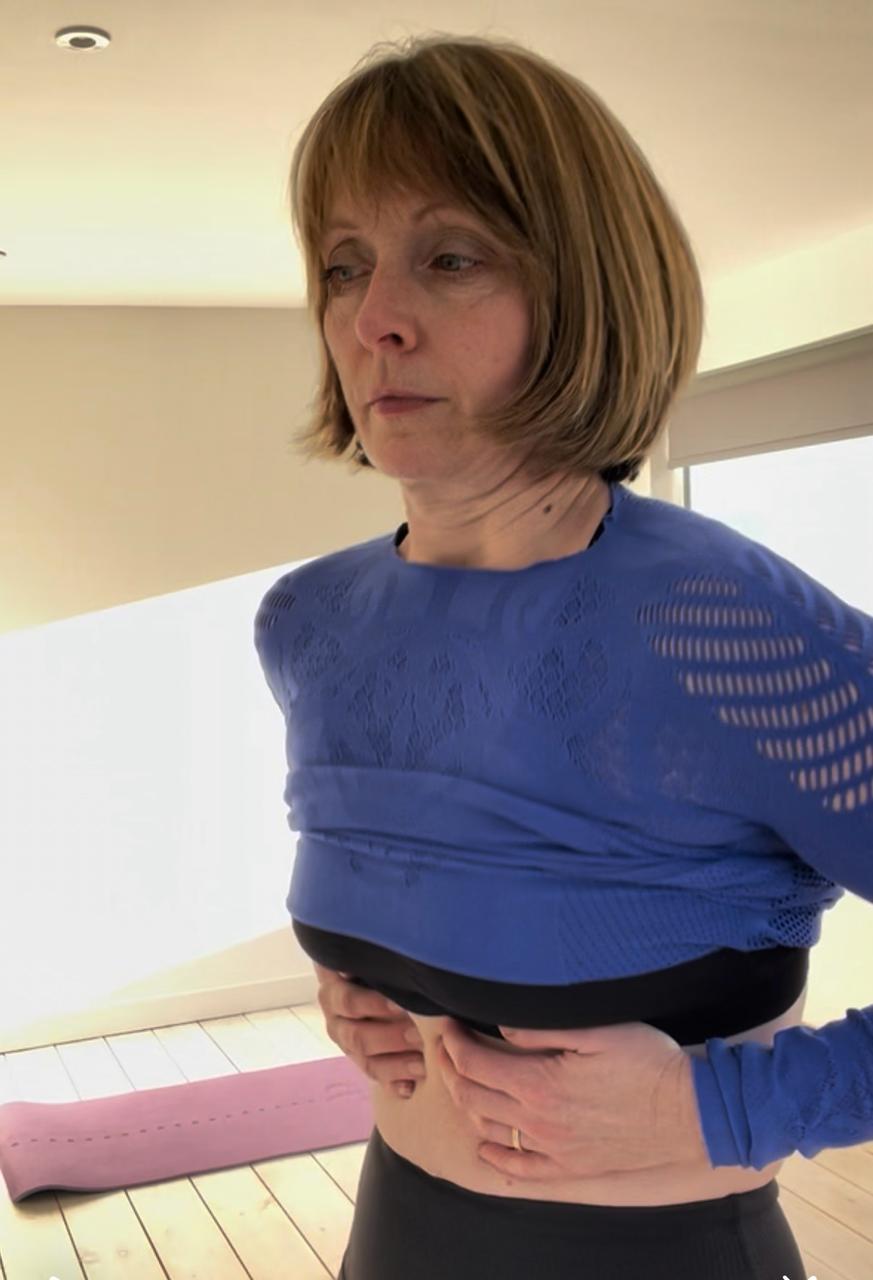
Here’s the truth:
There’s a direct link between pressure, core, and pelvic floor function.
Think about it —
Understanding Pressure in the Body
The human body has three main cavities:
When there’s too much pressure in one cavity compared to the others, the body experiences an imbalance of load — and this imbalance happens with every single breath you take.
There are only three directions that pressure can go:
What Happens When We Stop “Sucking In”
When clients come to me with pelvic floor dysfunction, something amazing happens:
By working on their alignment, addressing muscular imbalances, and teaching pressure awareness, breathing mechanics, and better movement habits, they don’t just feel relief — they also get stronger through their core.
And here’s the kicker:
I achieve all this without ever telling them to “suck in your abs,” “engage your core,” or “lift your pelvic floor.”
My Full-Body Approach to Pelvic Health
Because prolapse, hernia, and abdominal separation are all pressure issues, I look at the whole body to identify and prioritize what needs attention first.
Here are some of the first things I explore:
Bathroom Habits
Are they straining to wee or poo?
Would a “knees above hips” setup — like a Squatty Potty — make things easier and more natural?
Foot Mechanics
How are their feet functioning?
Feet are the foundation of alignment — and they influence everything above them.
Glutes and Hamstrings
Are they a butt gripper?
Or do they have no visible glutes at all (which might indicate tight hamstrings)?
If so, before focusing on “strength,” we first need to restore length to those tight muscles to create balance in the chain of movement.
Breathing Mechanics
How do they breathe?
If it’s classic belly bracing or shallow chest breathing using the neck and shoulders, we start by retraining their breath.
A simple cue like “blow out through your mouth as you lift” can re-engage the diaphragm, activate the core, and naturally lift the pelvic floor.
Breathing is a huge piece of the pressure puzzle.
Movement and Lifestyle
How much are they moving in daily life?
If walking or natural movement is limited, I’ll often start there. Walking helps:
It’s one of the simplest, most effective ways to integrate all the puzzle pieces together.
In Summary
There you have it —
A whistle-stop tour of just some of the factors I focus on to improve reflexive core function and reduce the likelihood of hernias and prolapse.
Want to Take the Next Step?
Did you find this useful?
If you’re ready to address your prolapse, hernia, or abdominal separation with a whole-body, pressure-based approach, join my
Conquer Your Pelvic Health Programme.
Let’s help your body find its balance — no more sucking in required.
